ServiceNow, Cloud Cost Management
From visibility to value
Cloud Insights showed customers what had happened in their cloud. Fewer than one in ten used it. I led the pivot into Cloud Cost Management, a FinOps product that helps teams act on what they see.
- Role
- Design leader
- Pod
- 2 PMs, 2 designers, 1 researcher
- Timeline
- About 4 months of design cycles, July to October
- Outcome
- Active users from under 10% to 34%
Sunset it, or reposition it?
Adoption sat below 10%, and the product risked becoming shelfware inside enterprise contracts. The data showed why: cloud providers already gave customers the same visibility.
But the gap was also an opportunity. Customers’ spend was visible but unmanaged, 35% of workloads were oversized, and nobody was clearly accountable for budgets across teams. The market signal was a misfit, not irrelevance.
The pivot: from cost visibility to cost accountability
- Assign cloud spend, alert on thresholds, report on spend.
- Identify waste, highlight inefficiencies, show who causes it.
- Automate tasks, recommend workflows, attribute ownership.
How I led
I stepped in at four levels: direction, orchestrating the shift from a visibility tool to a FinOps product; alignment on goals, personas and the MVP definition; process, setting priorities and roadmap sequencing and running three rounds of design feedback; and system, driving platform alignment on the critical shared components.
I empowered the two designers to lead the designs, with weekly check-ins, and stepped in where the strategy and the platform needed me.
Three teams, three jobs
Budgeting
Keeps cloud spend inside budget with reporting and forecasting.
Monitoring
Manages the cost of their applications, with clear accountability.
Accountability
Automates cost-saving processes and optimization.
The roadmap, as a five-stage FinOps maturity model. Solid lines shipped in the first release; dashed ones came later.
Identify
Visibility on cloud inventory.
Track
Cost analysis across clouds.
Reduce
Role-based access, alerts and recommendations.
Customize
Policy-based governance.
Evolve
Actionable insights.
Shipping the MVP
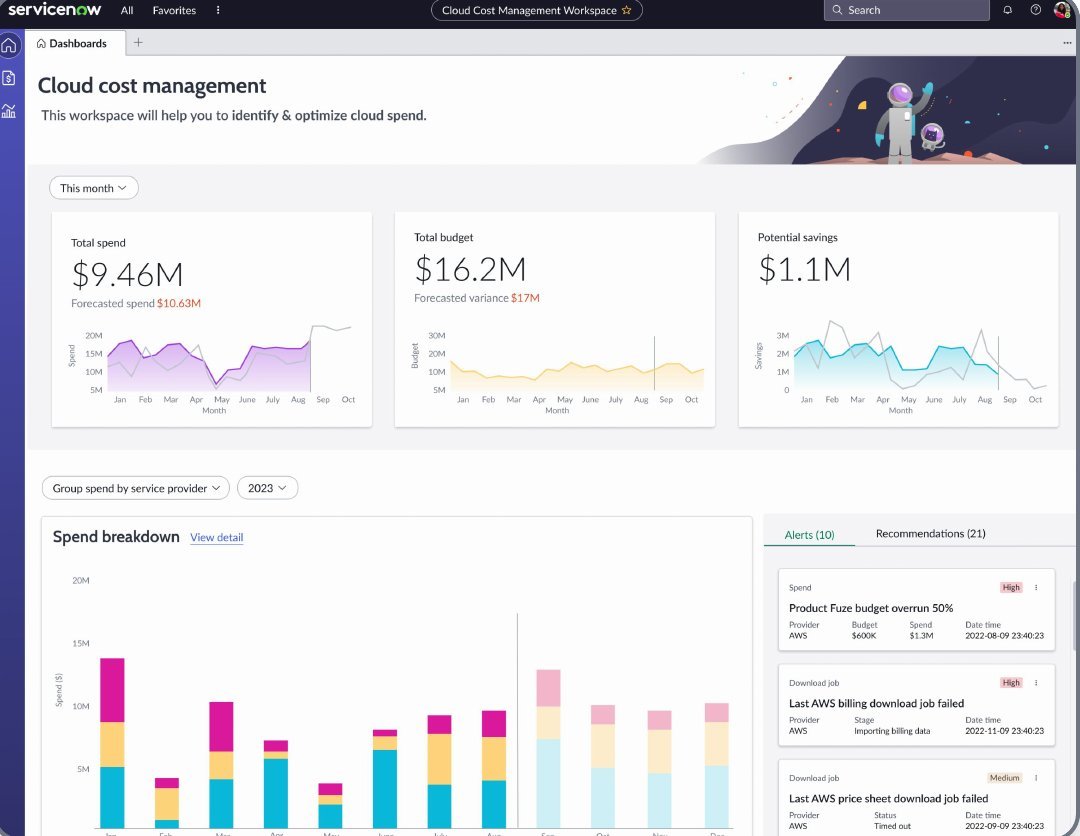
The ideal design used a budget gauge the platform didn’t have yet. Rather than block the release, we shipped a simpler version.
Then I turned the gap into a platform win. I found designers in other business units who needed a gauge, built a case with customer validation and competitor data, and got the platform team to prioritize the component. Two releases later, the gauge shipped in Cloud Cost Management.
What I learned
- Every problem hides an opportunity.
- Define the MVP scope early.
- Validate fast with low fidelity.
- Expect change, and collaborate across teams early.
Outcome
A product that was a candidate for sunset became a value-add product, with persona-based modules and better cloud utilization for customers.
- <10% → 34%active users
- 3persona-based modules
- 2 releasesuntil the missing component shipped